
Mk1 Big Healey-the life, times and adventures
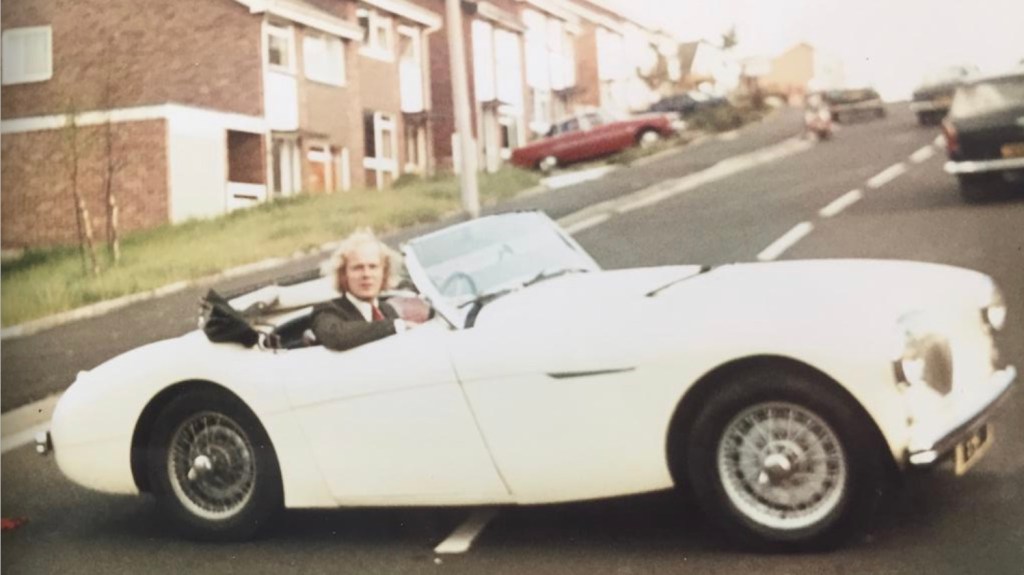
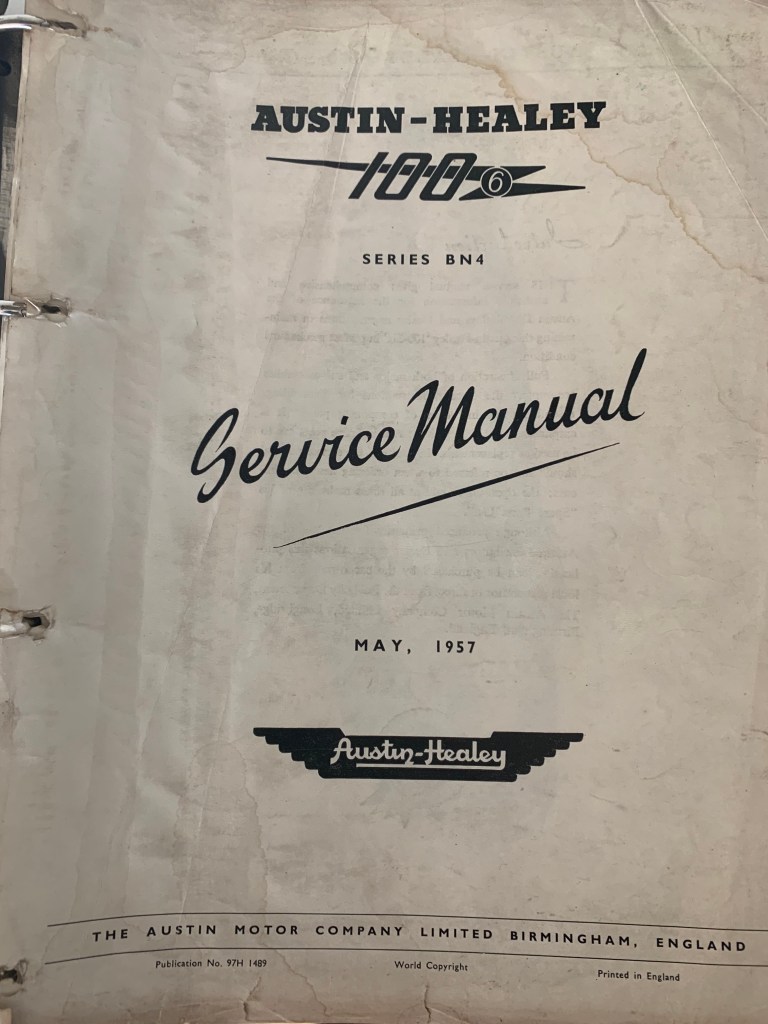
Austin Healey 100/6 BN4 ,Engine 97H 1489 was built in May 1957 , Martin owned it in the 1970’s. Loving the hair!!
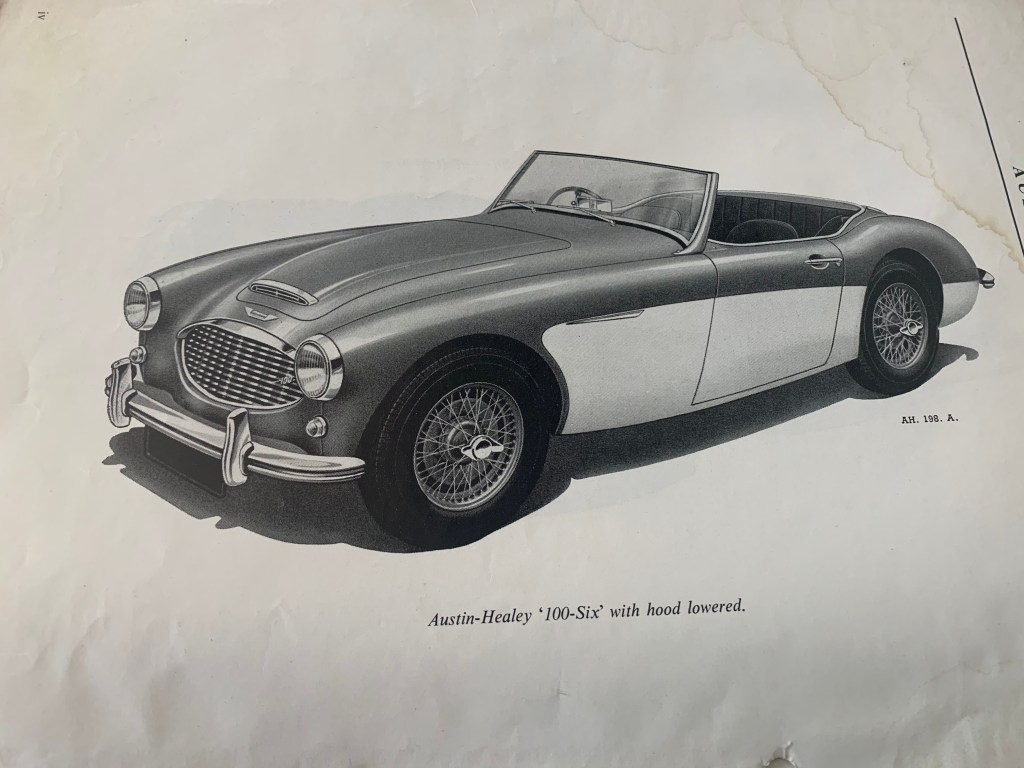
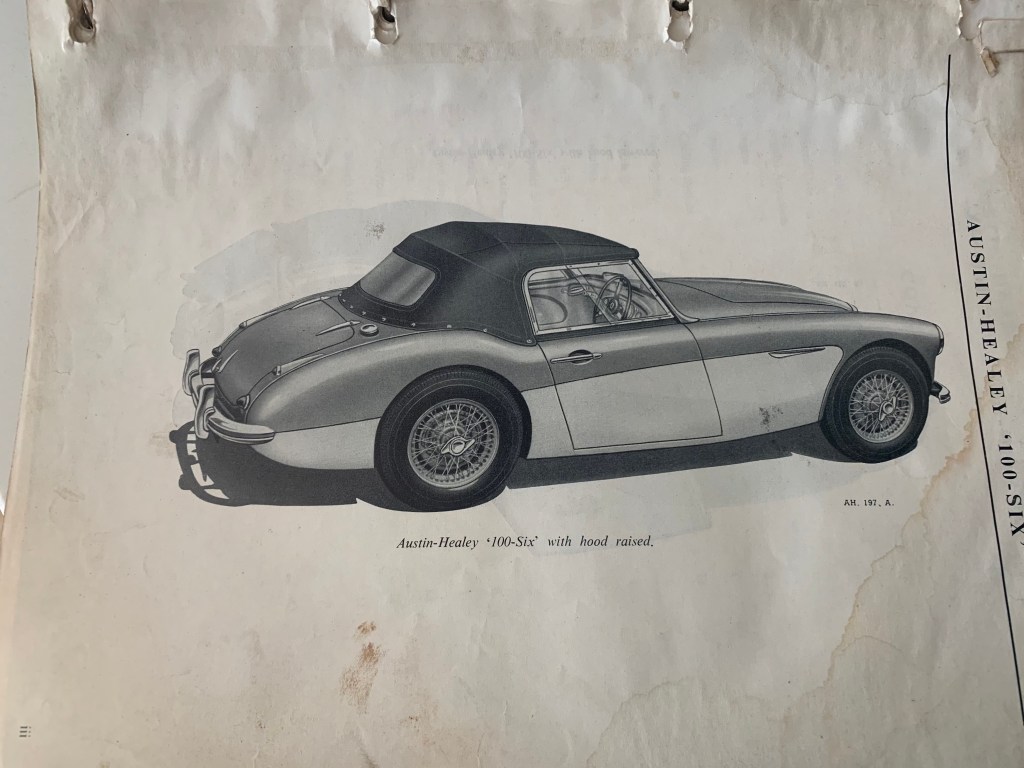
He kindly sent me the original Service Manual, I will post a few of the amazing technical drawing images and general data pages….all fascinating .

Known as the Big Healey to differentiate the model from the diminutive Austin-Healey Sprite, the Austin-Healey 3000 was a sportscar in the classic English vein built from 1959 to 1967.
Successor to the popular Austin-Healey 100-6, the 3000 was renamed to celebrate the adoption of a 3.0-litre in-line six-cylinder engine, offering up to 150bhp in its final Mark III guise. The 100-6 was itself a redesigned version of the Austin-Healey 100 series, a car that was based on Austin Atlantic running gear, and named for its ability to crack the magic ton – quite a feat in the early 1950s.
When the 3000 arrived, it quickly made its mark as a rally car, with many class victories to its credit under the auspices of the BMC competitions department. The 3000’s factory racing career ended in 1965 though, as BMW turned its attention to the giant-slaying Mini Cooper S.
The Big Healey has a reputation as something of a ‘hairy-chested’ sports car, thanks to its firm ride, heavy steering and grunty engine. Nonetheless it remains highly popular in the classic market today, thanks to its relative simplicity and muscular good looks.
Available both as a two-seater and a 2+2, the Big Healey to have is the 3000 MK III. It’s the last of the line, but also the best appointed with the most power and the most luxurious interior that included wind-up windows and a walnut dashboard.


THE new BMC. Drawing Office Building at Longbridge, will enable the main design forces of the group to be concentrated under one roof for the first time. Another big step forward in realizing the aims for which the BMC. was formed. It will be completed in June.
At the moment the various design departments are scattered throughout the Corporation’s factories, making co-ordination difficult. The new building will help BMC. to pursue still more vigorously the policy of standardization and ‘commonization’ of components to achieve the greatest economies in production.
A striking feature of the handsome new building, designed by the BMC. architects, Harry W. Weedon, FRIBA. & Partners, is the excellence of the working conditions.
Design staff will enjoy an exceptional amount of natural light at their drawing-boards, as well as abundant fresh-air ventilation, with-out draughts.
This vast general drawing office cost £550,000 and is nearly 60,000 sq.ft. in area as big as many a factory. (It is, incidentally, twice the area of the BMC. Joy Car Factory at Bargoed, where 350 people are employed.)
It will receive a high degree of available daylight through six ‘monitors’-glass-sided raised portions in the roof. And on sunny days there need be no fears of the atmosphere getting uncomfortably hot; an efficient extraction system takes care of that. The air flow can be increased by 50 per cent. in warm weather.
Artificial general lighting is provided by recessed fluorescent fittings with directional reflectors. The main entrance, with executive offices and conference room, faces one end of the lawn in front of the Administration Block-to which the Drawing Office is connected by a bridge with lifts at each end. Among other features are print rooms, and a special drawing office of 7,840 sq. ft. above the main executive offices.
Mr. Geoffrey Eyre, BMC. Building Projects Engineer, told BMC. World: ‘The object of the exercise is to give the maximum daylight when it is there, and as much fresh air as we can possibly put in without draughts. ‘The lighting has been very carefully designed.’
Donald Healey had great experience of competition work and was able to recommend various safety precautions. This included a complete Graviner fire extinguisher system, which is mounted for both the engine compartment and the fuel compartment in the tail that holds the 25 gallon tank. The system was fitted with an impact switch which brought it into operation automatically should the car sustain an impact above a set figure. The system could also be operated by the driver, with a red button that replaced the normal horn button in the centre of the steering wheel. Instead of the normal steering wheel the Austin Healey works produced a special rectangular shape for Donald Healey as a normal wheel interfered considerably with his vision from the cockpit.
Other safety devices included a crash arch behind the driver, two levers, one on each side of the cockpit, to enable the driver to jettison the blister cockpit cover, and a special switch in the engine lubrication system which at once would switch off the fuel supply if the oil pressure dropped below a certain figure, to prevent a fire following an engine blow-up.
It was now time to do some testing by Geoffrey Healey in the UK at a local airfield, where speeds of 130 mph were attained. After some small modifications to the engine and suspension, the car was ready to be shipped to the Salt Flats.


 Nancy the Austin Healey