Donald Healey built cars at Warwick using one basic chassis design in 1946 Donald Healey showed at the 1952 Earls Court Show a new sports car using Austin A90 Atlantic running gear and called it the Healey 100. So impressed was the BMC’s managing director Leonard Lord that a deal was struck, so next morning the model on the stand had a new badge which announced to the world that this was the new Austin Healey 100.
Healey would design the cars and Longbridge would build and market them under the name of Austin-Healey. The actual body/chassis were made for BMC by Thompson of Wolverhampton.
It would take some time to get the sports car into production, at the earliest by the middle of 1953. As a production line would have to be set up at Jensen Motors of West Bromwich to produce the body, with a line set up at Longbridge for the final assemble.
So a decision was made that Donald Healey Motor Company would produce a small batch by hand that would be used mainly for publicity, such as Motor Shows around Europe and America, and also be loaned out for the press to try and the public to view. I’m sure that some would have been used by the team to test components etc. Donald Healey built cars at Warwick using one basic chassis design in 1946 Donald Healey showed at the 1952 Earls Court Show a new sports car using Austin A90 Atlantic running gear and called it the Healey 100. So impressed was the BMC’s managing director Leonard Lord that a deal was struck, so next morning the model on the stand had a new badge which announced to the world that this was the new Austin Healey 100.
Gerry Coker, designer of the Healey 100 working on his drawing board. Gerry was inspired by the appearance of Italian cars. He was responsible for the attractive styling of the Austin Healey’s, a styling that today still fascinate many people.
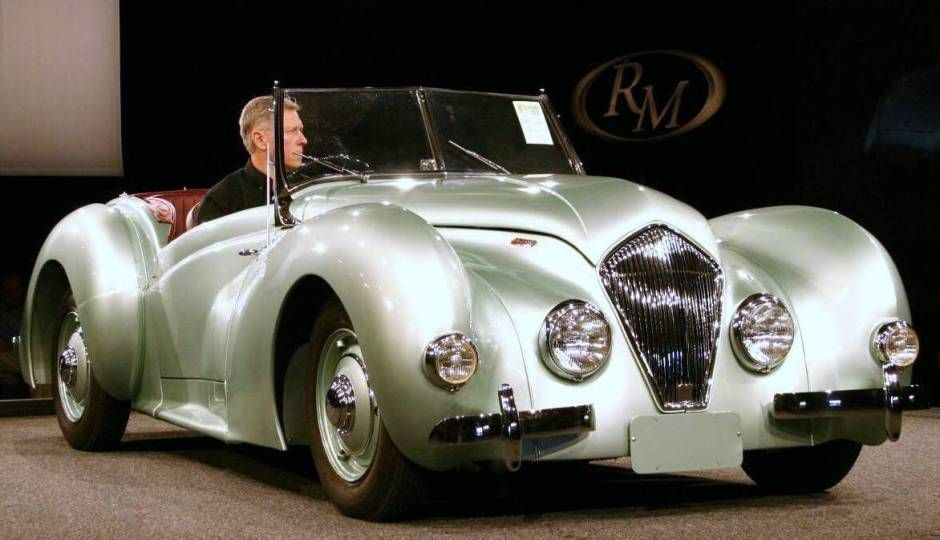
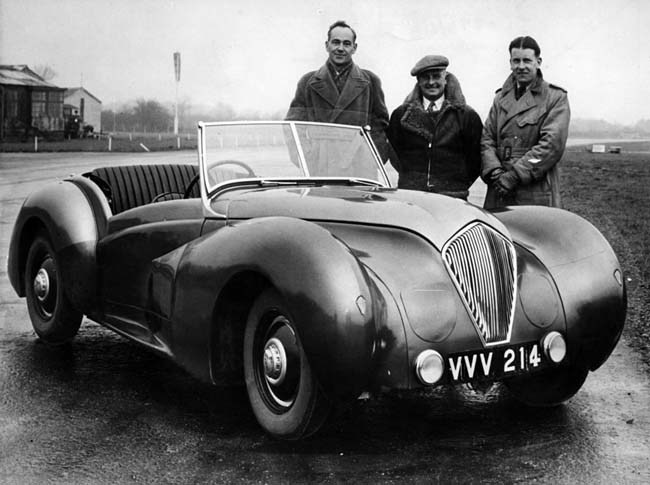
This is a 1948 Westland Abbott Healey the same model participated in the 1948 Mille Miglia. With their 2.4 litre riley engine, they were the fastest production cars in the world. Healey introduces 3 different models that year, the silverstone, the abbott and the elliott.
The Healey Westland was designed during the war. Initially Donald wanted to sell his concept to Triumph. That didn’t work out and he took on production himself. The picture was taken at the original factory. Beautiful lines even in the rain !
Donald Mitchell Healey (DMH) was born in Perranporth, Cornwall. This family photo shows Donald Healey with his parents. according to DMH this picture is still the most convincing evidence that he actually possessed hair at some point in his life
Donald Mitchell Healey (DMH) was born in Perranporth, Cornwall in 3rd July 1898. His parents were John and Emma.
After serving as a pilot in World War I for the RFC (Royal Flying Corps), Donald Healey opens up his first garage in Perranporth. His first car was the Ariel 10 for which he acquired a dealership for Cornwall. With the same car he won the RAC rally.
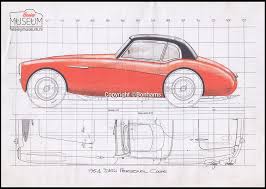
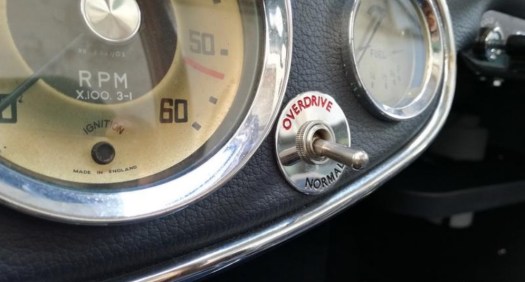
The Austin-Healey 3000 is a British sports car built from 1959 to 1967, and is the best known of the ‘big’ Healey models. The car’s bodywork was made by Jensen Motors, and the vehicles were assembled at the BMC Abingdon works. The 3000 was a successful car which won its class in many European rallies in its heyday – and is still used in competition by enthusiasts today. The original Austin Healey 3000 had a 2912 cc (nearly 3 litres) I6 engine, with twin SU carburetors and Girling front disc brakes. It was only referred to as the Mark I after the Mark II was released, previously only being known as the 3000. Wire wheels, overdrive gearbox, a laminated windscreen, a heater, an adjustable steering column, a detachable hard top and two tone paint were all available as options. The original 3000 was built from March 1959 – March 1961 and has model designation BT7 MkI (4 seat version) and BN7 MkI (2 seater). A BT7 3000 with hardtop and overdrive tested by The Motor magazine in 1960 had a top speed of 115 mph (185 km/h) and could accelerate from 0-60 mph (97 km/h) in 11.7 seconds. A fuel consumption of 21.6 miles per imperial gallon (13.1 L/100 km; 18.0 mpg-US) was recorded. The test car cost £1326 including taxes. Introduced in March 1961, the 3000 Mk II came with three SU HS4 carburettors and an improved camshaft, designated the BT7 MkII (4 seat version) and BN7 MkII (2 Seat version). However, upon the introduction of the BJ7 (2+2 seats) model in January 1962, the number of carburettors was reduced to two, (SU type HS6) due to the problems experienced with balancing three carburettors. As a result of the introduction of the BJ7, the BN7 MkII was discontinued in March 1962, and the BT7 MkII followed in June 1962. Externally, the main changes introduced with the BJ7 were a vertical barred front grille, wind up windows rather than side curtains, an improved hood, and a wrap-around windscreen. Optional extras were similar to the MkI, although the option of a factory hardtop was not available from the BJ7’s introduction. From August 1961 a brake servo was also available as an optional extra, which greatly improved braking performance. The BJ7 was discontinued in October 1963 with the introduction of the 3000 MkIII. A 3000 MkII BT7 with hardtop and overdrive tested by the British The Motor magazine in 1961 had a top speed of 112.9 mph (181.7 km/h) and could accelerate from 0-60 mph (97 km/h) in 10.9 seconds. A fuel consumption of 23.5 miles per imperial gallon (12.0 L/100 km; 19.6 mpg-US) was recorded. The test car cost £1362 including taxes. The 3000 Mk III was launched in October 1963, and remained in production until the end of 1967 when production of Austin-Healeys finally ceased. (One further car was built in March 1968.) Classified as the BJ8, the new model was the most powerful and luxurious of the big Healeys, with a walnut-veneer dash, wind up windows, and 150 hp (112 kW) engine. Improvements to the engine included a new camshaft and valve springs, and twin SU 2″ HD8 carburettors, together with a new design of exhaust system. Servo-assisted brakes were now fitted as standard. Only 2+2 seat versions were made. Option extras were similar to those offered for the MkII, the main change being that the standard interior trim was now Ambla vinyl, with leather seats being added to the list of options. In May 1964 the Phase II version of the MkIII was released, which had a modified rear chassis to allow rear ground clearance to be increased, and subsequently, in March 1965 the car also gained separate indicators. Austin Healey 3000’s have a long competition history, and raced at most major racing circuits around the world, including Sebring (USA), Le Mans (France), and Mount Panorama Circuit, Bathurst (Australia). The BMC competitions department successfully rallied the 3000 from its introduction, but the development of the works cars was effectively ended in 1965, mainly due to the success of the Mini Cooper ‘S’.



 Nancy the Austin Healey